Same-day diagnostic. We diagnose first, quote second — and we repair what we can before we recommend a replacement. An EV charger repair is usually cheaper than people expect, and we say so before any work starts.
Get Your Free Quote
Thank You For Your Submission!
A team member will be reaching out to you shortly.




If you're seeing any of these, your charger needs a real diagnostic — not a guess. Most of these issues are electrical rather than a dead unit, and a proper diagnostic separates the two.
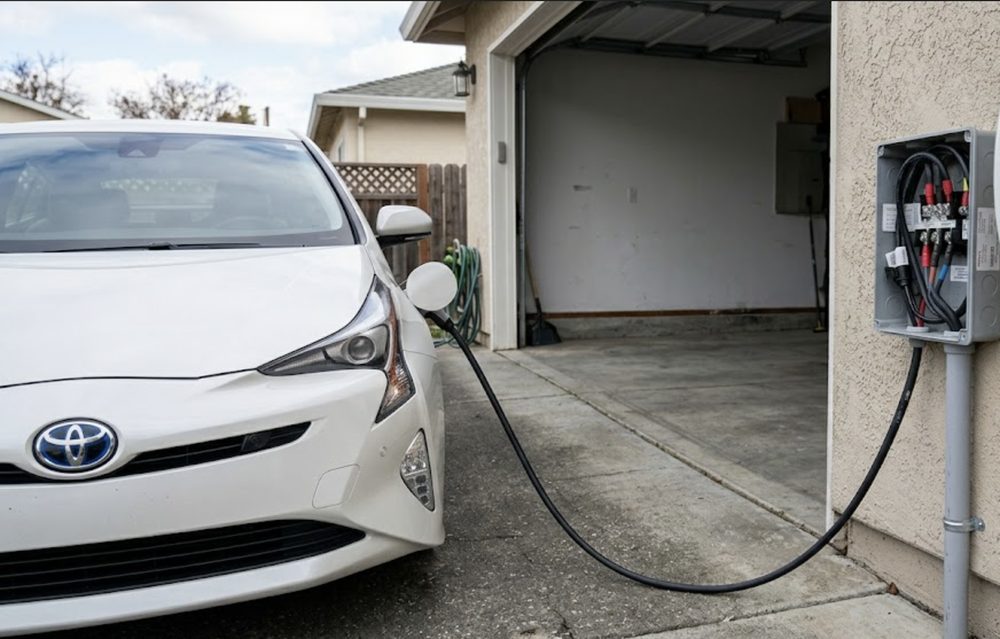
Brown marks around the outlet, a plug that feels hot, or the smell of burnt plastic. Don't keep using it — this is a fire hazard. Turn the breaker off and call us today. Heat marks are an electrical problem rather than a charger problem. The unit is usually fine once the supply side is sorted.
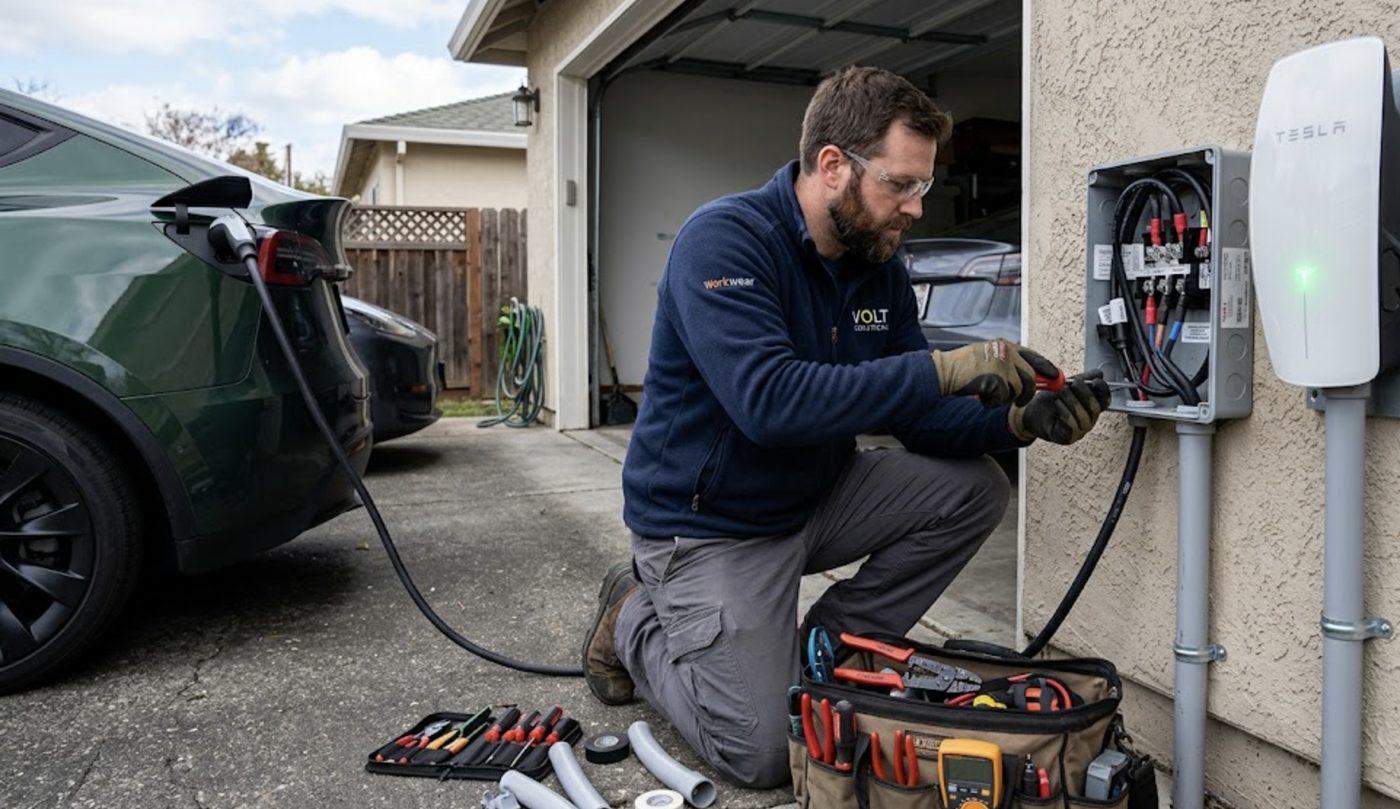
Red light, no light, or the breaker pops every time you plug in. Usually a wiring or breaker issue — not the charger itself. We diagnose before we recommend anything. A tripped breaker is the most common culprit, and a meter reading settles it in minutes.
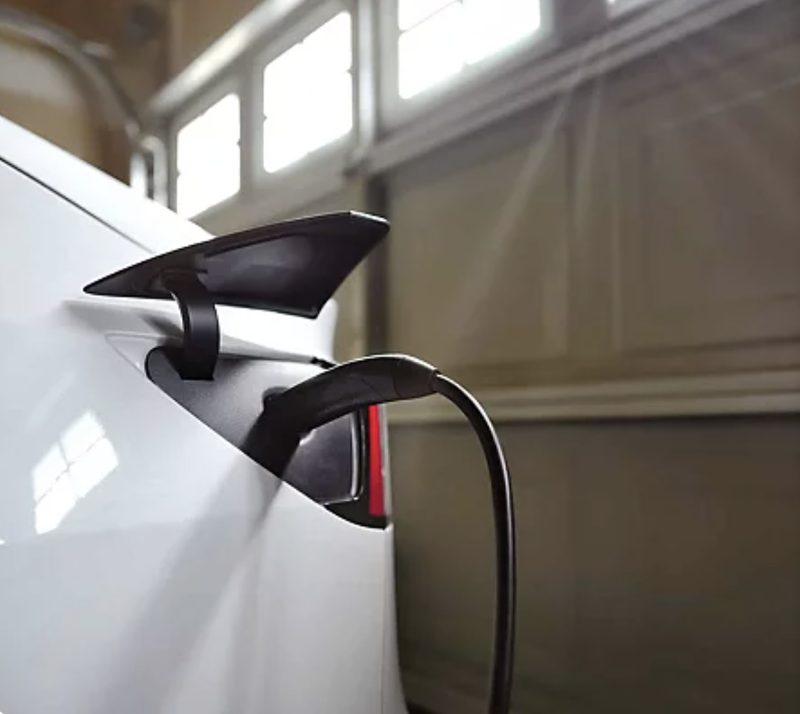
Used to charge fast, now it crawls. Could be a loose connection, the wrong amperage in the app, or your car throttling. We sort it out in one visit. Your onboard charger sets a ceiling too, so a slow charge is not always the wall unit.
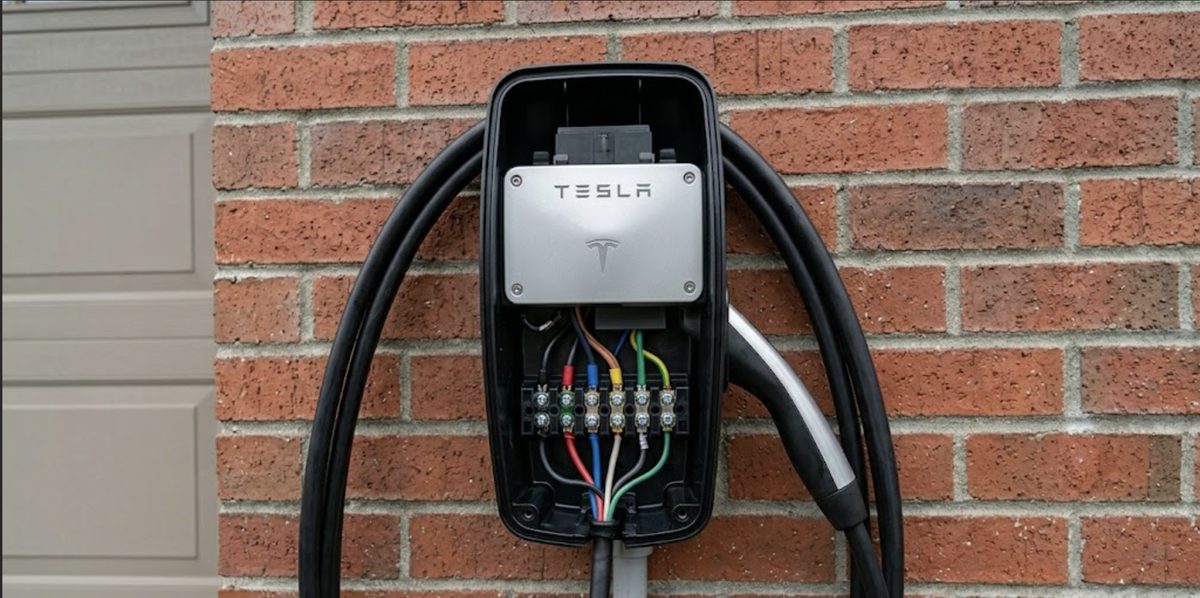
Tesla Wall Connector that won't show up in your app. ChargePoint Home Flex offline. JuiceBox dead after the Enel X shutdown. We pair it back up — or replace it the right way if it's done. Pairing trouble is software rather than electrical, and it almost never needs an EV charger repair at all.
Most "broken charger" calls aren't actually broken chargers. About 8 in 10 are a melted outlet, the wrong breaker, a loose terminal, or a missed setup step from the original installer. Our EV charger repair service at NextHome EV Charger Installation starts with a flat-rate diagnostic — you know the cost before we touch your panel. If we can fix what's there, we fix it. If the unit is truly done, we tell you straight. That holds for home and commercial units alike.
We're certified on every major Level 2 brand — Tesla Wall Connector, ChargePoint Home Flex, Wallbox Pulsar Plus, Grizzl-E, JuiceBox, and Enphase. If your original installer used industrial-grade parts and torqued every terminal to spec, the repair is usually a same-day fix. If they cut corners, we replace the bad parts the right way. Good wiring repair work behind the unit is what makes a fix last longer than a season.
Repairs typically run $200 to $600 all-in. A full charger replacement runs $900 to $1,500 once you include labor and a new unit. If we can't fix it, you don't pay the diagnostic. Commercial units run higher because the electrical work behind them is larger.
Most fixes are on the supply side, not the charger itself. We replace melted outlets with industrial-grade parts, swap GFCI breakers that nuisance-trip, and re-torque every terminal to spec. An electrical repair on the supply side outlasts swapping the charger every couple of years.
Tesla Wall Connector that won't pair to the app. ChargePoint Home Flex offline. Wi-Fi confused. Power Share never set up. We sort the software side in under an hour. Software work is not really a repair, so we price it as a service call instead.
If you own a JuiceBox 40, your app stopped working in 2024. The hardware still charges, but the scheduling and smart features are gone. We swap it cleanly to a new charger — and we can reuse your existing wiring. We keep a short list of chargers worth moving to, and we will tell you which ones we would put in our own home.
Our Process
Text or call us with your charger brand, what it's doing, and a photo of the outlet or breaker if you can. We can often narrow down the fix before we even leave the shop. Photos of the breaker panel help most. Electrical issues show up there before they show up at the charger.
We show up, run the tests with a real meter and an infrared scan, and tell you exactly what's wrong in plain English. You know the cost before we touch your panel. The same diagnostic works on a commercial unit, and the service is priced the same way.

Most repairs wrap in 60 to 90 minutes — receptacle swap, breaker change, app pairing, torque check. If a part needs to be ordered, we tell you the wait and lock the price. Most home visits finish inside that window, and charger maintenance on the same trip costs nothing extra.
Before we leave, we plug your car in and confirm the charger pulls the full amperage for at least 15 minutes. You get a written invoice with torque values, parts used, and a 90-day workmanship warranty. That test is the difference between a repair that holds and one that comes back. Energy draw is measured, not assumed.
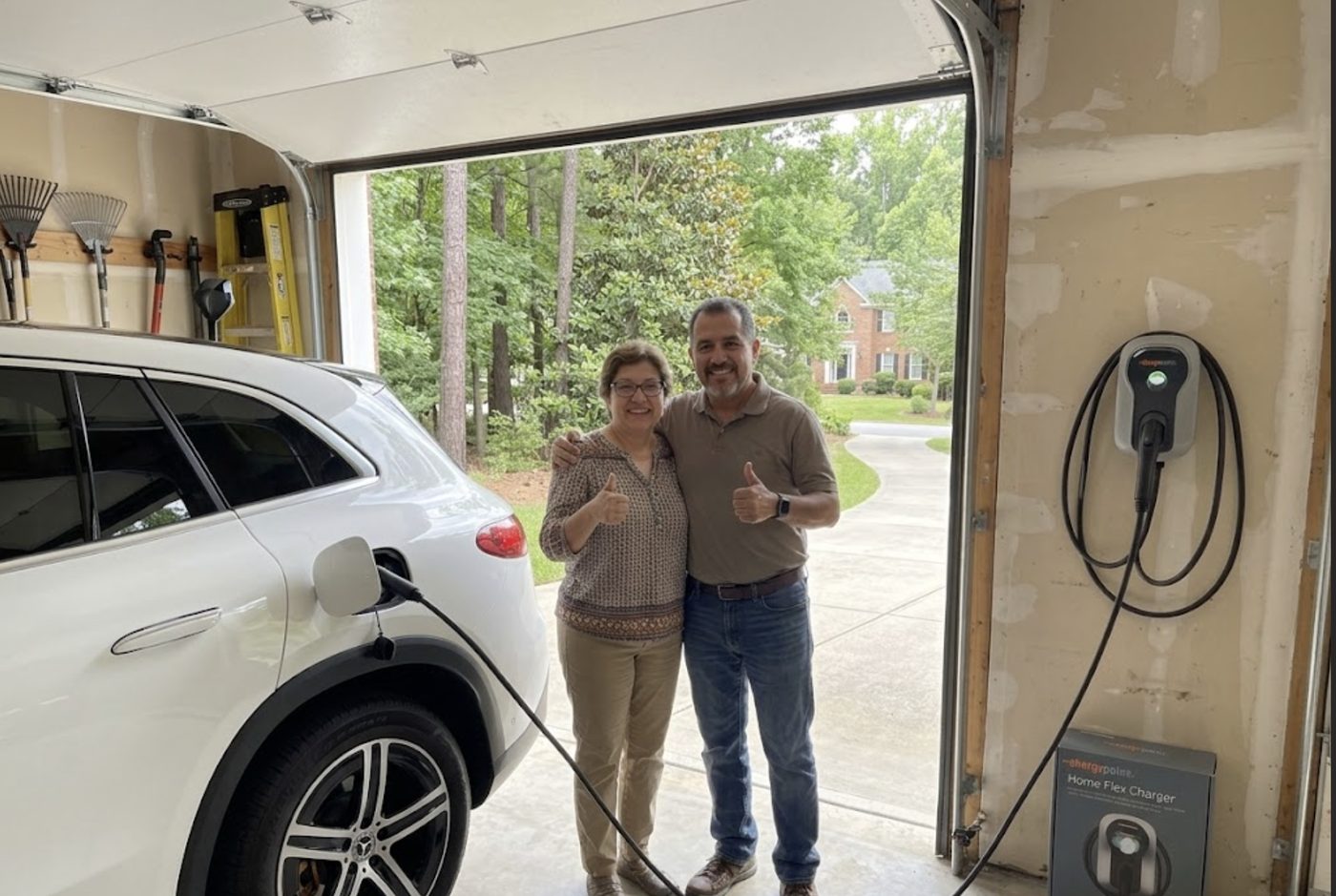
We diagnose before we quote. Most repair shops show up planning to sell you a new charger — that's the biggest invoice. We're not that. About 8 in 10 of our repair calls save the existing charger because the real problem is on the supply side, not the unit itself. We tell you the truth, in writing, before we touch anything. Most EV chargers we see are fixable. The electrical work behind them is where the real trouble usually sits.
We're certified on every major Level 2 brand. Tesla Wall Connector, ChargePoint Home Flex, Wallbox Pulsar Plus, Grizzl-E, JuiceBox, and Enphase — we know which ones are repairable, which ones are out of warranty, and which manufacturer left their customers stranded after a bankruptcy. We don't push a brand we don't trust. We service every one of those chargers, and we keep track of which are still supported.
We fix the root cause, not just the symptom. A melted outlet means the next charger will melt too unless we swap to an industrial-grade part and torque every terminal to spec. A tripping breaker usually means a circuit conflict, not a faulty breaker. We diagnose all the way down — and the repair holds. Regular maintenance catches most of it early, and it costs less than any repair.
Get My Free Quote
Most home EV charger repairs run between $200 and $600 — including the diagnostic, the labor, and the part. A burned outlet replacement lands at $300 to $450. A full charger replacement runs $900 to $1,500 once you include labor and the new unit. The diagnostic fee is credited to the repair if you go forward. Those figures are for a home. Commercial work is priced separately because the electrical scope is different.
The most common cause is a series-GFCI conflict — your charger has a built-in ground-fault detector, and the breaker has one too, and they fight each other. Other causes: an undersized circuit running at its limit for hours, or a real ground fault inside the unit. We isolate the cause in under thirty minutes. It is one of the more common electrical issues in homes wired before EVs were common.
No — a melted outlet has to be replaced, not repaired. The wiring behind it needs to be checked for heat damage too. The replacement should be an industrial-grade outlet, properly torqued. For daily EV charging, hardwiring the charger directly is often the safer long-term move. Hardwiring also removes the weakest point in the whole electrical run.
The hardware still charges your car. But the original Enel X Way app shut down in October 2024, and the long-term software future is uncertain. If you want scheduling, time-of-use rates, or remote control back, the cleanest fix is to swap to a different charger — see our Level 2 EV charger installation page for the setup. We can reuse your existing wiring. Either way the energy side stays the same, so the wiring you already have will carry it.
Repair if your unit is under 5 to 7 years old, parts are available, and the cost is well under half of a new charger. Replace if it's over 8 years old, the manufacturer is out of business, or you've had repeated failures. If a new install makes more sense, our home EV charger installation service covers every brand. The federal tax credit ($1,000, expires June 30, 2026) makes replacement easier to justify. That threshold is where an EV charger repair stops making sense.